kmed Journal

Kmed Journal of Anatomy

Mapping the Human Body — From Structure to Function to Clinical Application

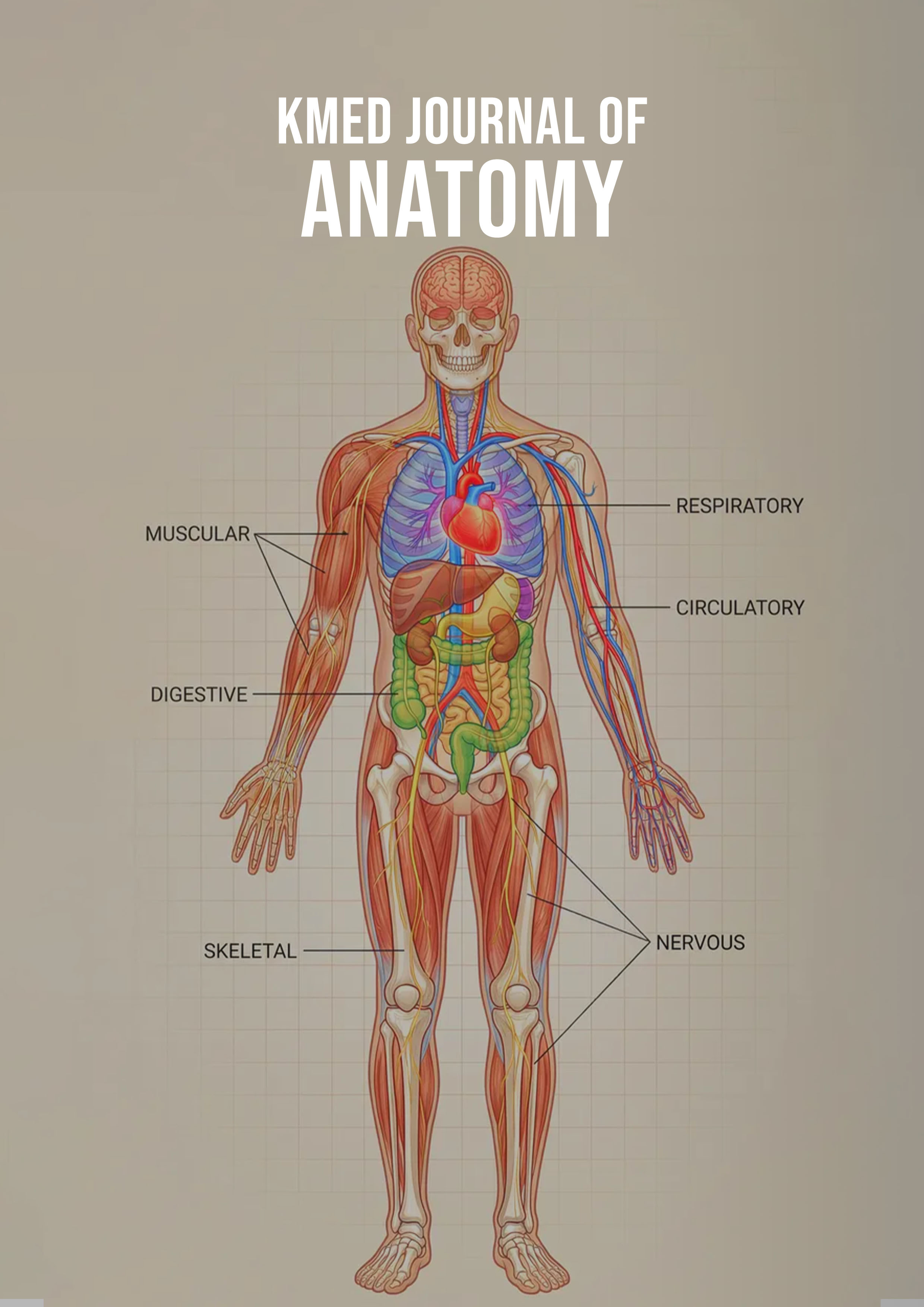
Anatomy is the foundational language of medicine — where structure determines function, where spatial relationships define surgical approach, and where anatomical variation can be the difference between routine and complicated. Every surgeon navigates anatomical planes, every radiologist interprets anatomical landmarks, and every clinician relies on anatomical knowledge to examine, diagnose, and treat. Kmed journalof Anatomy exists for the anatomists, medical educators, and clinical researchers who study, teach, and apply the science of human structure.

We publish original research, morphological studies, anatomical variations, cadaveric dissections, imaging anatomy, and systematic reviews across the full breadth of anatomical science. Whether you are documenting a rare arterial variant, evaluating anatomical teaching methods, or describing surgical anatomy relevant to a novel procedure — if it advances understanding of human structure or improves anatomical education, it belongs here. Every submission undergoes rigorous peer review, and every published article is freely accessible to the global anatomy and medical education community.


Why publish with us?

Submit Your Manuscript – Share Knowledge

The Subject areas covered by the kmed Journals include (but are not limited to)

  • General Anaesthesia Pharmacology - Induction, Maintenance, And Recovery
  • Regional Anaesthesia - Spinal, Epidural, Peripheral Nerve Blocks
  • Local Anaesthetics - Agents, Techniques, And Toxicity Management
  • Airway Management - Intubation, Supraglottic Devices, Difficult Airway Protocols
  • Perioperative Monitoring - Hemodynamic, Respiratory, And Neurological Monitoring
  • Pain Medicine - Acute, Chronic, And Cancer-Related Pain Management
  • Critical Care And Intensive Care Anaesthesia
  • Paediatric Anaesthesia - Safety Considerations, Pharmacology, Neonatal Care
  • Obstetric Anaesthesia - Labour Analgesia, Caesarean Section Protocols, Maternal Safety
  • Cardiac Anaesthesia - Intranperative Care, Cardiopulmonary Bypass, Post-Op Recovery
  • Neuroanaesthesia - Brain And Spine Surgeries, Monitoring, ICP Management
  • Thoracic Anaesthesia - Lung Isolation, One-Lung Ventilation, Thoracic Surgical Support
  • Ambulatory (Day-Care) Anaesthesia - Protocols, Safety, Recovery Optimization
  • Geriatric Anaesthesia - Risk Stratification, Multimorbidity Considerations
  • Anaesthesia For Emergency And Trauma - Rapid Sequence Induction, Resuscitation
  • Perioperative Medicine - Preoperative Assessment, Risk Stratification, Optimization
  • Pharmacology Of Anaesthetic Agents - Mechanisms, Interactions, Adverse Effects
  • Patient Safety And Quality Improvement In Anaesthesia
  • Anaesthesia Equipment And Technology - Ventilators, Infusion Pumps, Monitoring Systems
  • Education And Simulation In Anaesthesia - Training, Skill Development, Innovation

Editorial Board

Updating Soon